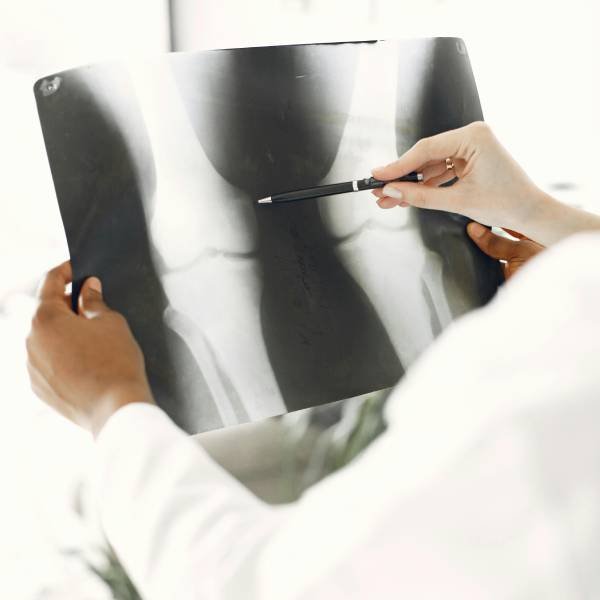
Radiation is energy transmitted in the form of waves or particles.
Some forms of radiation are harmless (such as visible light or radio waves).
Others, known as ionizing radiation, have enough energy to pass through materials and affect tissue.
In medical and industrial environments, the main types used are:
- X-rays
- Gamma rays
They are essential for diagnosis, inspection, and treatment.
However, they require control and protection.
X-rays and gamma rays are part of the electromagnetic spectrum and are located in the highest-energy region.
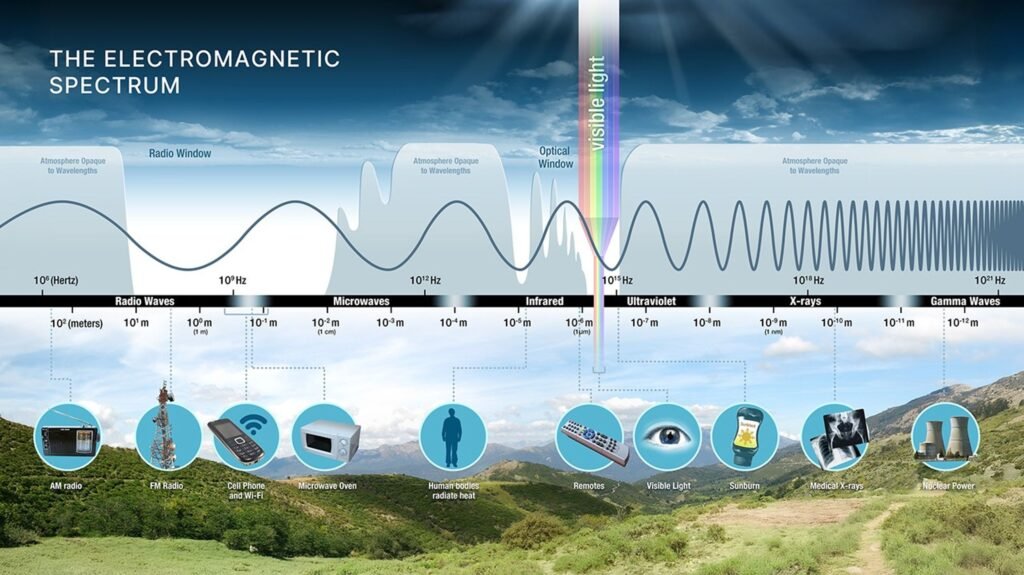
As can be seen in the electromagnetic spectrum, X-rays and gamma rays are located at the highest-energy end, which explains their ability to penetrate materials and the need for specific shielding systems.
Tipos de radiación y materiales de protección
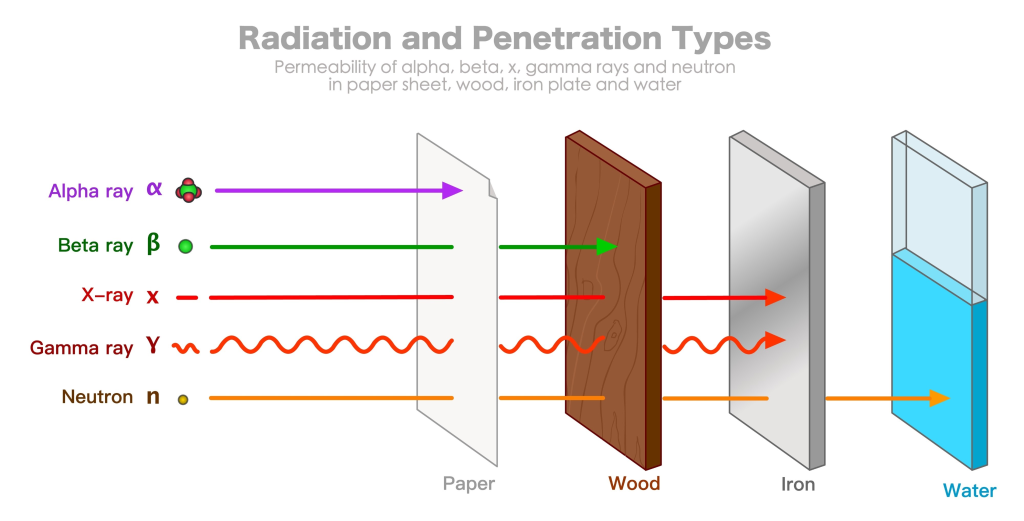
Not all radiation requires the same type of shielding.
- Alpha radiation → is stopped by paper or skin.
- Beta radiation → is attenuated by wood or aluminum.
- X-rays and gamma rays → require high-density materials such as lead.
- Neutrons → are attenuated by water and concrete.
X-rays and gamma rays are highly penetrating. To attenuate them effectively, materials with high density and a high atomic number are used.
Lead combines both characteristics, making it possible to achieve the required level of protection with relatively small thicknesses. For this reason, it is the standard material in X-ray rooms and nuclear medicine applications, compared with alternatives such as steel, which would require greater thickness to provide the same protection.
¿Por qué se necesita blindaje?
In hospitals, clinics, and industry:
- X-rays are generated by equipment operating between 30 and 300 kV.
- In nuclear medicine, high-energy gamma sources are used.
Shielding has a clear objective:
✔ Protect healthcare staff
✔ Protect operators
✔ Prevent unnecessary exposure in adjacent areas
✔ Comply with regulations
Due to its high density and atomic number, lead is particularly effective at absorbing this type of radiation.
Radiación natural y artificial
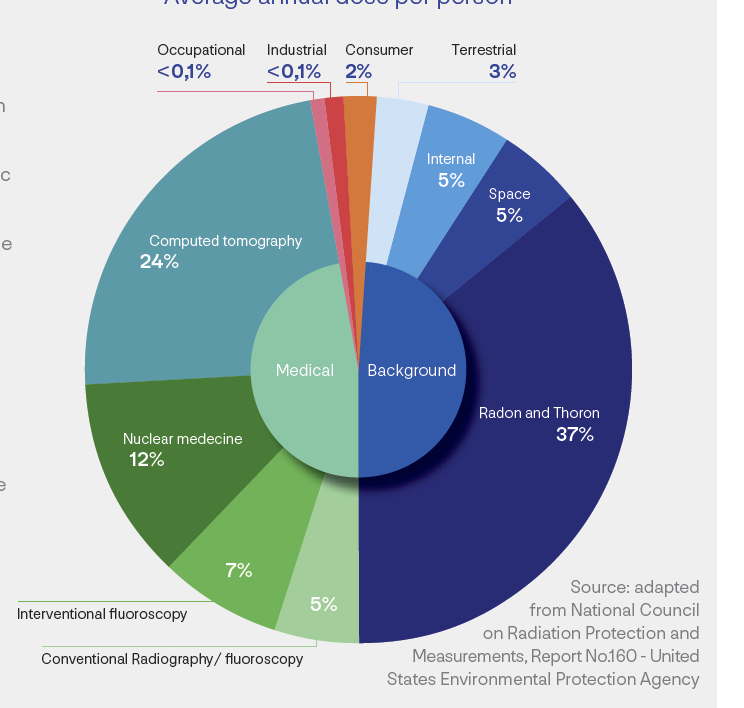
We are all exposed daily to natural radiation:
- Cosmic radiation
- Minerals in the ground
- Radon
- Internal radiation from the body
However, the greatest artificial exposure comes from:
- Medical radiology
- Computed tomography
- Nuclear medicine
That is why healthcare facilities require specific radiation protection solutions.
Where leaded glass comes in
In many applications, it is necessary to combine:
- Radiation protection
- Direct visibility
Leaded glass makes it possible to maintain visual control of the patient or the process, while ensuring the required shielding against X-rays and gamma rays.